IP Rights And Their Importance In The Creative Industries
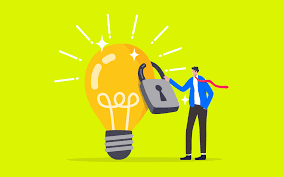
What is Intellectual property(IP)
Intellectual property refers to any creative work that can be considered an asset or physical property. The modern concept of intellectual property was developed in England in the 17th and 18th centuries. The Statute of Monopolies (1624) and the British Statute of Anne(1710) are the origins of patent law and modern copyright legislation. The term "intellectual property" began to be used in the 19th century; however, it wasn't until the 20th century that intellectual property became standard throughout the world's legal systems. Before this, the term "Literary property" was used.
The idea of intellectual property was created to give people and businesses property rights to the information and intellectual goods that people make for a limited period. This encouraged the creation of a variety of products. Intellectual property falls into four main areas; copyright, trademarks, design and patents.

Copyright
copyright applies to any recorded artistic or literary works; this can include a broad range of productions, including;
- Literary works, such as poetry, song lyrics, software, websites, etc
- Dramatic works, such as dance choreography, plays, etc.
- Musical Works, in both sound recordings and score notation.
- Artworks, such as photography, painting, digital art, maps, logos, etc.
- Typographical arrangement of published articles such as magazines, etc.
- Sound recordings and recordings of copyrighted material.
- Films, video footage, etc.
A copyrighted material gives the creator specific rights about the work and prohibits unauthorised use of or actions. The author of a copyrighted work can take legal action against infringement or plagiarism.

Trademarks
A trademark can be used with a sign, logo, slogan, etc., to prevent any confusion in the marketplace. Trademarks can be represented with either an 'R' in a circle ®, referring to a registered trademark or the letters 'TM'. Alongside these, the USA has created a separate classification using the letters SM referring to 'service mark' and has the same legal protection as trademarks.
There are two different types of trademarks, registered and non-registered. Common law can protect from what is referred to as 'passing off'. If someone were to use the same mark in a similar market and cause confusion among customers, you could claim on a non-registered trademark, but you must be able to prove/demonstrate that 'passing off' has occurred.
If you want to add weight to your claims, then you should register your trademark and can do so in countries such as the UK, USA, Japan, etc. By doing this, you will have the support of a governing body.
Design Rights
A design right can be used in conjunction with a physical product. This might be related to the appearance of a product, shape, texture, colour, materials, etc. A product must be different from any other existing design to qualify for a design right. Like a trademark mentioned before, a design right has some protection under common law but can also be registered for further protection.
Patents
Lastly, we have patents that apply to industrial processes and inventions, and they are in place to protect against the unauthorised implementation of a vision.
Patents are issued by governing bodies to award exclusive rights to sell, manufacture or use an invention. Patents registered can take several years to be granted.
Is Intelectual Property hurting or helping the creative industries?
"Those who do not want to imitate anything, produce nothing" - Salvador Dali.
It is widely accepted that intellectual properties do wonders to help professionals secure rights for their work, but what about the other side of the coin? Some would argue that no one has genuinely original thoughts or ideas and that most new creations are extensions or developments of what already exists.
It is a consequence that intellectual property laws have the effect of making people share less. For an Idea or product to be profitable, it has to first be scarce, and for it to be scarce, it has to be owned by an individual or company. When an idea is owned, it is held to make a profit, not for creative advancement.
Below is a short but informative talk on the subject by Harrison Dressler,
"It's a little of a catch-22 situation. I want my work to be out there and my photos to be seen, but I don't want them to be abused. On my website, you can't just right-click and copy an image. But there's nothing to stop people taking a screen grab and copying it that way" - Rick Bronks - intellectual property: Satureyes Photography.
Most creatives in the industry don't have an issue with individuals using their images regarding non-profit implementation, so long as they are credited for their work. In many cases, a simple email to the creator to ask permission is enough to gain consent for use.
What are my views?
While I feel there is a valid point against the necessity for IP rights, I don't think those points can dismiss their need in our current digital climate. It is easy for someone to steal or screenshot an image and use it without consent or, even worse, claim it as their own and not give any reference or credit to the original owner/creator. Unfortunately, this is the case for so many creatives in the industry who put massive amounts of time, effort and money into the work for it to be abused by pirates online.
As a student striving to earn a living in the creative industry, assurance that my work is legally protected means I can comfortably pursue a career doing what I love and attach a monetary value to the work that I create. Without IP rights, this would not be possible.

Comments
Post a Comment